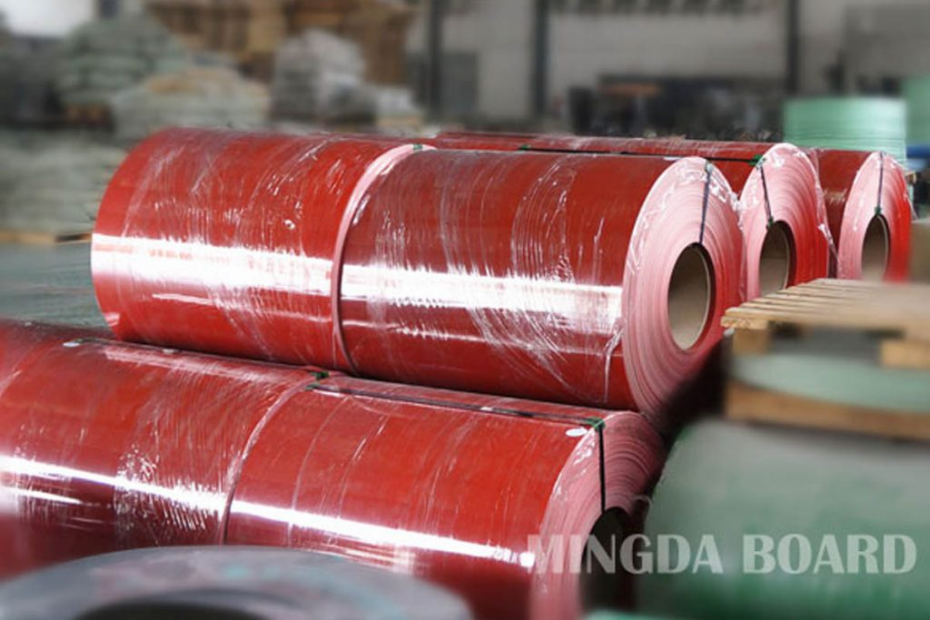
Steel coils often travel thousands of kilometers before reaching their final destination. During handling, storage, and transportation, they face numerous risks, including impacts, scratches, moisture, dust, and compression. Without proper protection, these factors can damage the coil surface, reduce product quality, and increase financial losses.
To address these challenges, manufacturers widely useplastic protection boards for steel coilsas part of modern coil packaging systems. These durable plastic sheets act as protective barriers between the steel coil and external forces, helping preserve the coil’s surface condition throughout the supply chain.
What Is a Plastic Protection Board for Steel Coil?
A plastic protection board for steel coils is a rigid or semi-rigid protective sheet placed on the outer surface, top, bottom, or sides of a steel coil during packaging. It cushions the coil against mechanical damage while shielding it from environmental contaminants such as moisture, dust, and dirt.
Manufacturers typically produce these boards fromhigh-density polyethylene (HDPE),polypropylene (PP), or other impact-resistant engineering plastics. Among these materials, HDPE has become the preferred choice because it combines excellent toughness, moisture resistance, chemical stability, and recyclability.
Plastic protection boards are available in various sizes, thicknesses, and shapes to match different coil diameters, widths, and packaging requirements. Many suppliers also offer custom designs to accommodate specific customer applications.
How Does a Plastic Protection Board Work?
The primary function of a plastic protection board is to distribute external pressure evenly across the coil surface while preventing direct contact with packaging straps, wooden pallets, metal brackets, or other hard objects.
During transportation and storage, the board serves several important functions:
- Absorbs impact energy during loading and unloading
- Prevents scratches and dents caused by metal-to-metal contact
- Protects coated or polished steel surfaces
- Reduces deformation caused by concentrated pressure
- Creates a barrier against dust, water, and contaminants
When combined with edge protectors, wrapping film, steel strapping, and moisture-proof packaging, plastic protection boards significantly improve overall packaging performance.
Performance Characteristics
Modern plastic protection boards offer a combination of mechanical strength, durability, and environmental resistance that makes them ideal for steel coil packaging.
Excellent Impact Resistance
HDPE protection boards absorb shock effectively during lifting, stacking, and transportation. Even under repeated impacts, they resist cracking and help protect the steel coil from accidental damage.
This feature is particularly valuable during forklift handling, crane lifting, and long-distance shipping.
High Compressive Strength
Steel coils can weigh several tons. Plastic protection boards distribute heavy loads across a larger surface area, reducing localized pressure that could otherwise damage the coil.
High compressive strength also helps maintain package stability during warehouse stacking.
Outstanding Moisture Resistance
Unlike paperboard or wood, plastic protection boards do not absorb water.
Their waterproof structure prevents moisture from reaching the steel surface, reducing the risk of corrosion, oxidation, and staining during storage or overseas transportation.
This characteristic is especially important in humid climates and marine shipping environments.
Excellent Chemical Resistance
HDPE resists most industrial chemicals, including acids, alkalis, oils, greases, and many cleaning agents.
As a result, the boards maintain their performance even in demanding industrial environments.
Lightweight but Durable
Although plastic protection boards provide excellent mechanical protection, they remain significantly lighter than many alternative protective materials.
Their low weight simplifies handling, reduces packaging costs, and minimizes transportation expenses without sacrificing protection.
Advantages Over Traditional Packaging Materials
Compared with paperboard, plywood, or fiberboard, plastic protection boards offer several significant advantages:
| Plastic Protection Board | Traditional Paper or Wood Board |
| Waterproof | Absorbs moisture |
| High impact resistance | Easily damaged by impact |
| Excellent chemical resistance | Limited chemical resistance |
| Reusable | Often single-use |
| Recyclable | Limited recyclability |
| Lightweight | Generally heavier |
| Long service life | Shorter lifespan |
These advantages make plastic protection boards a more reliable and cost-effective solution for protecting high-value steel products.
Conclusion
Plastic protection boards play a vital role in modern steel coil packaging. By combining high impact resistance, compressive strength, moisture protection, chemical resistance, and lightweight durability, they effectively safeguard steel coils from damage throughout storage, handling, and transportation.