Steel coil wrapping machines primarily serve the automated wrapping and packaging of ring-shaped products such as copper strips, steel strips, steel coils, aluminum strips, bearings, steel wires, welding wires, cables, and rubber hoses.
Through precise mechanical transmission and an advanced film tension control system, the equipment accommodates steel coils with diameters typically ranging from 500 mm to 2,200 mm and weights from 500 kg up to 50 tons.
After wrapping, the packaged products achieve a clean and uniform appearance while significantly improving protective performance.
Specifically, the wrapping process enhances resistance to moisture, dust, corrosion, aging, and accidental impact damage.
As a result, it effectively extends product quality assurance during storage and transportation.
What is Steel Coil Protection Board
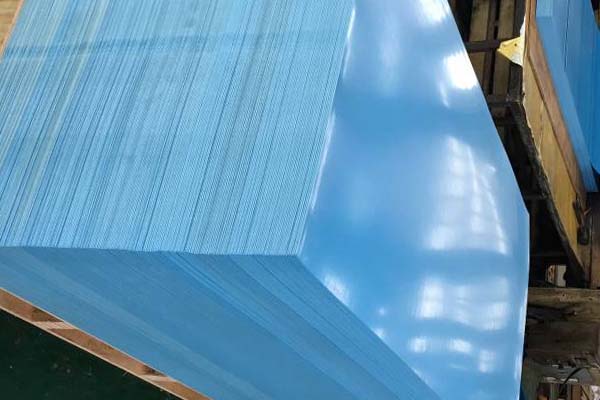
Steel Coil Protection Board, also known as Steel Coil Protection Material, provide rigid or semi-rigid external protection for steel coils.
Manufacturers typically use these boards together with stretch film, anti-rust paper, and other flexible materials to form a multi-layer composite protection system.
Producers usually manufacture steel coil packaging boards from galvanized steel sheets, cold-rolled steel sheets, aluminum alloy plates, or high-strength composite materials.
Depending on coil weight, transport distance, and storage environment, users select different thicknesses—generally from 0.5 mm to 3 mm—and structural designs to meet specific protection requirements.
Functions of Steel Coil Protection Board
- Mechanical protection — The boards resist impact, compression, and abrasion during transportation and lifting operations, thereby preventing edge damage to the steel coil.
- Moisture and corrosion prevention — When combined with vapor corrosion inhibitor (VCI) paper and plastic films, the boards block moisture and oxygen, which slows down oxidation of the steel surface.
- Structural support — During stacked storage, the boards provide structural stability and help prevent deformation or collapse of steel coils.
Key Protection Principles for Steel Coil Protection Board
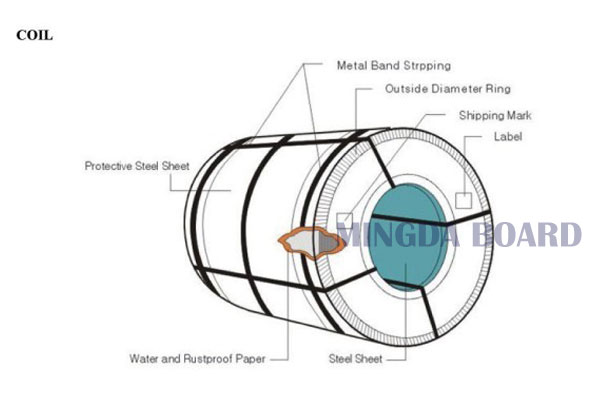
To ensure long-term corrosion protection during extended storage or sea transportation, steel mills widely adopt a multi-layer composite packaging system.This system typically includes the following structure:
Inner Layer Protection (Sealing and Isolation)
- VCI paper — VCI paper releases corrosion-inhibiting vapors, such as nitrite-based derivatives, which create a protective atmosphere in enclosed spaces and suppress electrochemical reactions on metal surfaces.
- Tape sealing — High-adhesion waterproof tapes, such as PET-based tapes, completely seal all wrapping edges and prevent moisture ingress.
Middle Layer Protection (Cushioning and Moisture Barrier)
- Plastic film (PE stretch film) — The film tightly wraps the steel coil, adds an additional moisture barrier, and reduces friction damage during transportation.
- Cardboard end covers — End-face liners fit closely to the coil ends and protect edges from abrasion.
- Corner reinforcement — Rigid paper or plastic corner protectors strengthen critical stress points and prevent deformation during lifting.
Outer Layer Protection (Impact Resistance and Waterproofing)
- Metal sheet cladding (galvanized steel sheet) — The metal cladding provides strong mechanical protection and resists compression during forklift handling or stacking.
- Steel strap fastening — High-strength steel straps, with tensile strength ≥900 MPa, secure the entire package and maintain overall structural integrity.
Conclusion
Steel coil packaging represents far more than a simple logistics operation; it plays a critical role in determining end-user satisfaction and product quality.
Looking ahead, as intelligent packaging technologies—such as humidity monitoring chips and self-healing anti-corrosion coatings—continue to evolve, steel packaging systems will move toward higher efficiency, improved sustainability, and greater intelligence.